
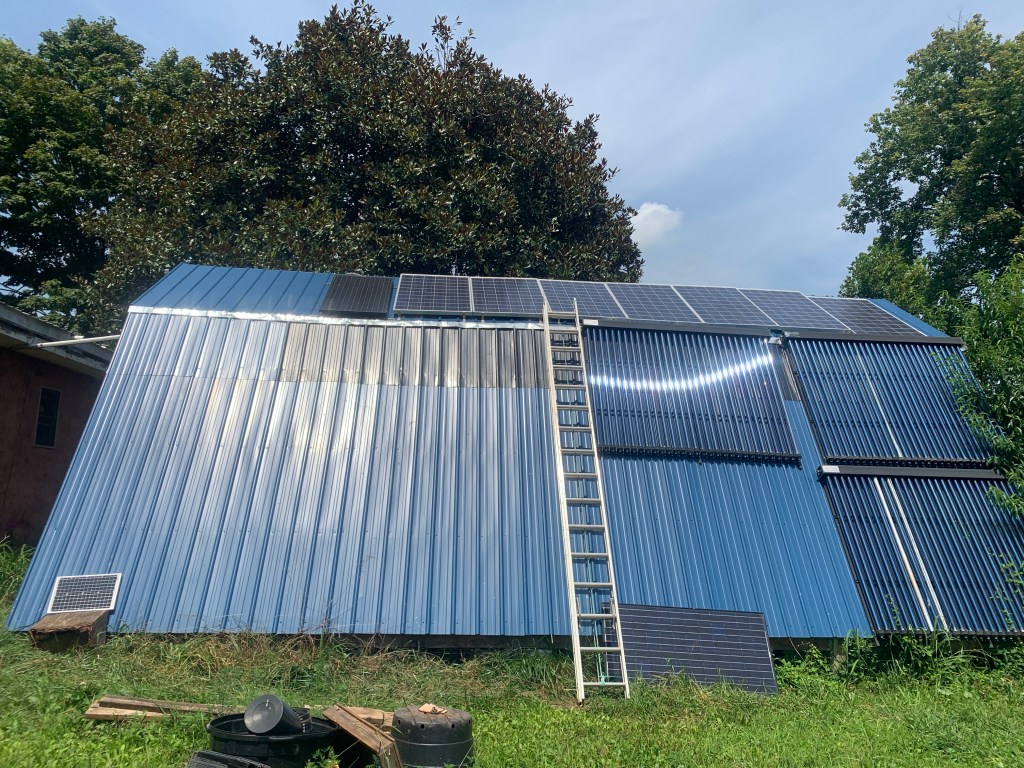
Sticking solar panels on the roof is often what first comes to mind for folks when they consider transitioning their home towards “greener” living. For those of us in sunny climes, technologies that allow us to direct the abundant of sunlight to meet our energy needs are powerful tools.
However, setting up a massive rack of photo-voltaic (PV) panels and a giant inverter battery bank, in an attempt to replace grid power with the same amount of solar electricity, is an immense waste of precious resources. While the price of PV panels has dropped significantly in recent years, their manufacture still depends on materials mined from the earth and a major investment of energy.
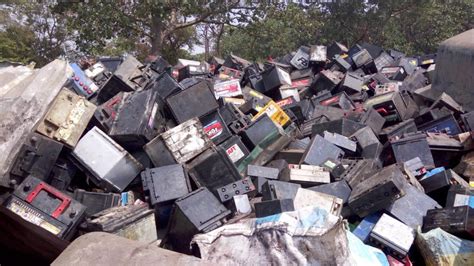
Many of these solar installations are then abandoned within a few years as the batteries decline, leaving piles of toxic lead, acids, and lost potential in their wake. Since batteries are the weakest link in most off-grid solar-electric systems, “grid-tied” systems have swelled in popularity. These installations promise the best of both worlds: powering your home with solar energy (and sharing the surplus with your neighbors), while having grid power as a backup when the sun isn’t shining, instead of quickly degrading batteries.
Sound too good to be true? The full truth is more nuanced. This is the understanding I came away with after some preliminary research:
Power companies are continually forecasting and monitoring localized demand for electricity throughout the grid, and adjusting production and distribution accordingly. They try to match current supply to demand as closely as possible. At the same time, they need to constantly overproduce as a buffer against sudden unexpected surges in demand.
Wind turbines and solar panels are by nature quite variable and unpredictable. To ensure a reliable supply throughout the day and night, utility operators will fire up the larger power plants to a set production level, based on predictions for that day / week. If it turns out to be sunnier and warmer than expected one winter afternoon, and there is suddenly more solar energy available and less demand for space heating, these power plants aren’t able to immediately reduce their production (and fuel consumption) an equivalent amount. The energy grid also has very little capacity for storing surplus electricity for later, so almost any excess power goes to waste.
In short, the design and scale of centralized grid power means that the surplus solar electricity cannot truly offset “dirty” energy production as much as glowing calculations make it seem – and will certainly never replace it! They don’t call it “grid-tied” for nothing. This approach means that no matter how many panels you put up, you will always be dependent on centralized grid power, and the destructive energy sources that fuel them, for a portion of each day.
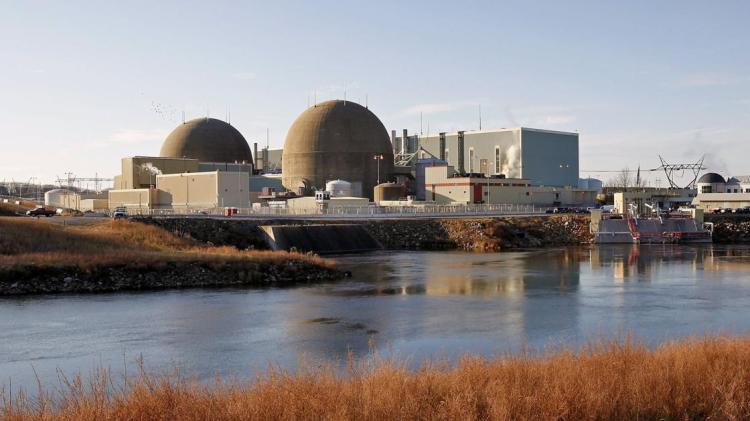
So how can we create resilient energy systems that are far less toxic and resource intensive, and truly break our dependence on destructive fuel sources?
The off-grid transition at Magnolia draws on the design principles and technologies developed at Living Energy Farm, who has been exploring these questions for over a decade.
- Minimize energy needs, and meet these needs as much as possible through other means besides electricity. This is why the first steps of our off-grid transition were wrapping the house in straw bales and insulating the attic, before we put up a single solar panel! Other forms this can take are large pressurized water tanks, which can be filled by a pump while the sun is shining and then supply water to the household without the need for electricity; passive solar design such as large south facing windows and shade trees; solar thermal systems for space and water heating; manually operated systems; and appliances that are more efficient and “flexible” in their energy needs. And, of course, one the simplest and most powerful solar technologies of all – the clothesline!
- Sidestep inverters and batteries as much as possible and run appliances, especially those pulling larger volumes of energy, directly off the solar panels with “daylight drive” systems. So far at Magnolia, we have a Sunstar fridge, a Roxy 90-volt insulated cooker, and a converted hot plate, blender, and hand mixer that run on direct-current (DC) electricity directly from PV panels. Belt motors, brush motors, and universal motors, especially those without elaborate electronic interfaces, are good candidates for daylight drive systems.
- A modest set of nickel-iron batteries (far more durable and less toxic than lead acid) is then sufficient to provide for remaining electricity needs, such as lights and charging electronics.
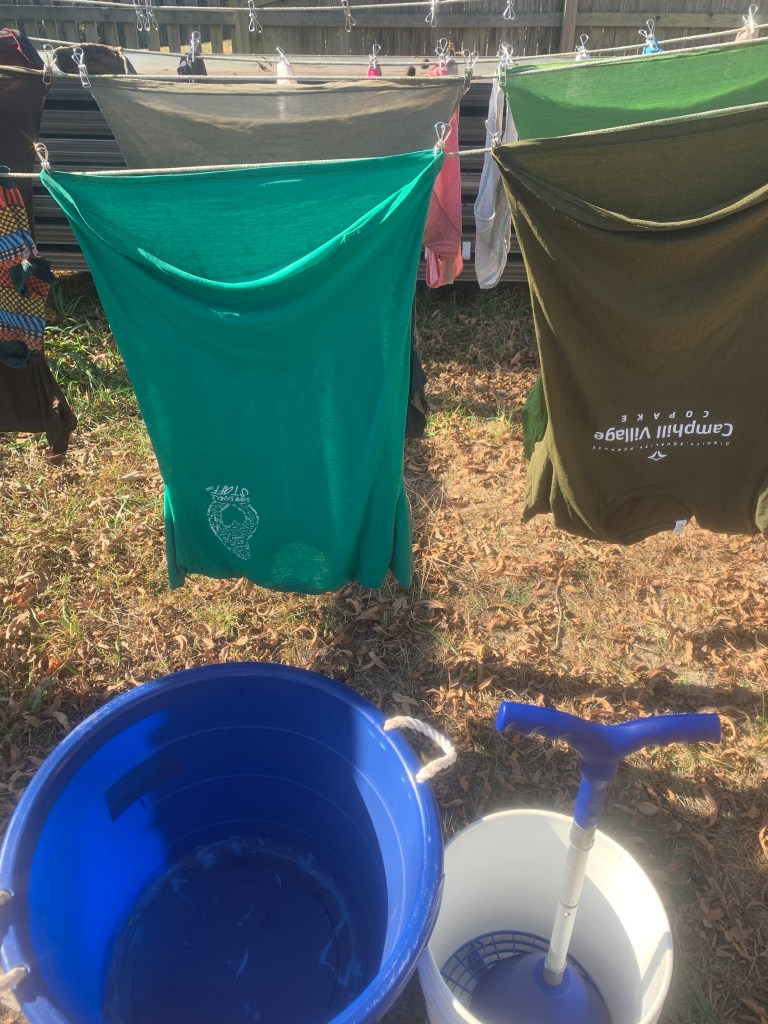
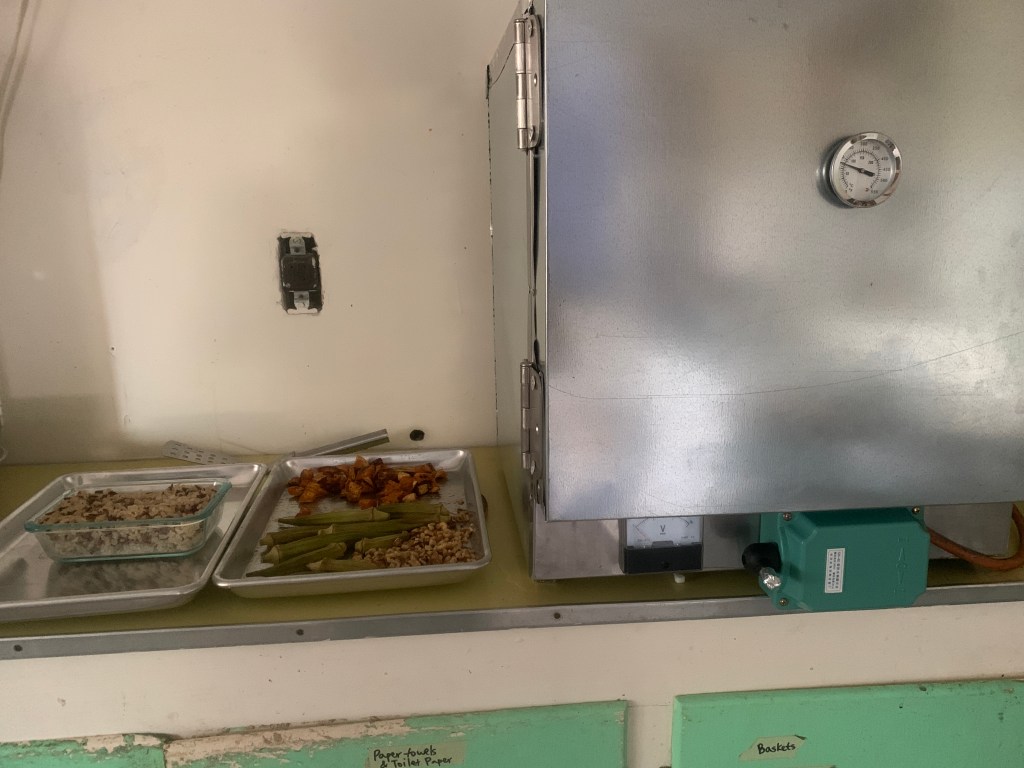
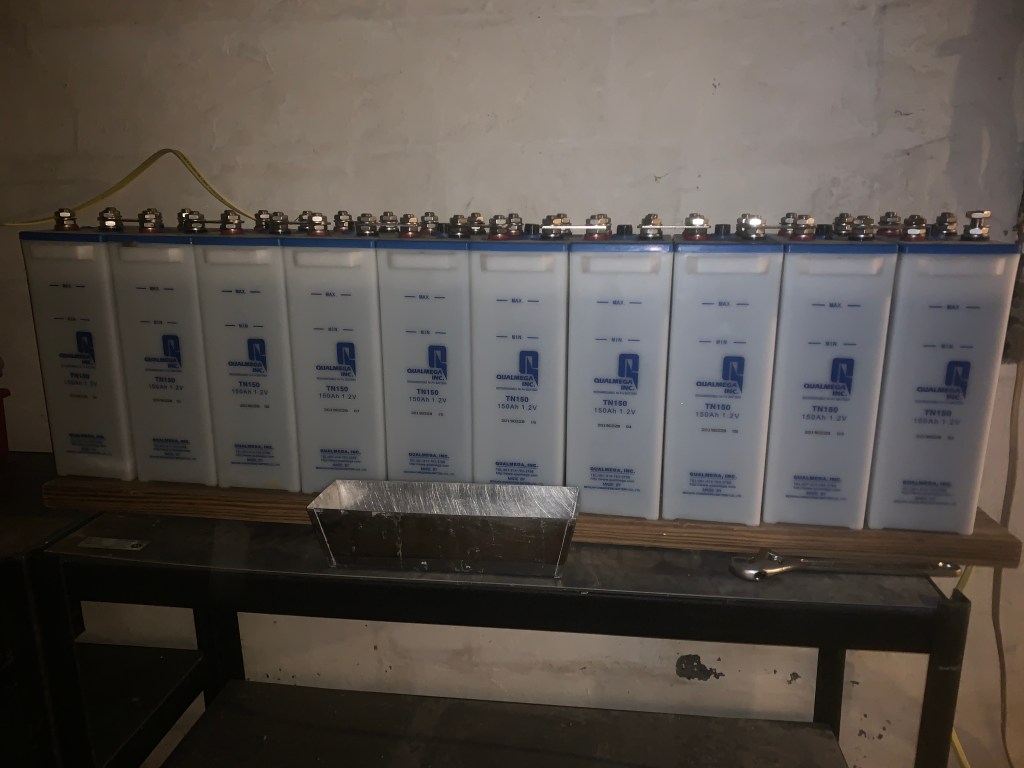
Left to right: Laundry day, Cooking with the “Roxy” solar oven, NiFe Battery Set
Eager to learn more? You can find more of the “nuts and bolts” of the installation process here (coming soon!), or return to an overview of the off-grid transition.
 magnoliacollective.org